
How to Keep a Real Christmas Tree Fresh in Los Angeles
Dry air, Santa Ana winds and warm afternoons are hard on a cut tree. Here's the simple routine we'd follow to keep a real fir green and drinking all season.
By Hanniel & Dana, LA Christmas Tree Delivery · · 7 min read
To keep a real Christmas tree fresh in Los Angeles, start with a fresh cut on the trunk, put it in water right away, and check the stand every day so it never runs dry. Then keep the tree away from wall heaters, fireplaces, heat vents and hot, sunny windows. That's most of it.
The rest is about our climate. A cut fir doesn't care that it's December. It cares that the air in your living room is dry and warm, and LA has plenty of both. So a tree here needs a little more attention than one in a snowy town. Here's what we'd do with our own tree.
Why do Christmas trees dry out faster in LA?
A cut tree keeps pulling water up through its trunk and losing it through its needles. The drier and warmer the air around it, the faster that water goes. Southern California stacks a few things against a tree:
- Low humidity. Our air is often dry in late fall and winter, and dry air pulls moisture out of needles.
- Santa Ana winds. These hot, dry winds blow in from the deserts, often in fall and winter. Humidity can drop very low while they blow, and that dry air finds its way indoors.
- Warm afternoons. A December afternoon in Glendale or Pasadena can feel like spring. A warm room makes a thirsty tree.
- Indoor heat. Plenty of older LA apartments and houses have gas wall heaters. Newer places use forced air through floor or ceiling vents. Fireplaces get lit on cool nights. All of them put out dry heat.
- Sunny windows. South and west windows get strong afternoon sun. A tree sitting in it all day warms up and dries out.
None of this means a real tree won't last here. It just means water is the whole game.
Start with a fresh cut and get it in water
Once a tree is cut, the base starts to seal over with sap. After that seal forms, the tree can't drink well, no matter how much water is in the stand. A fresh cut opens it back up.
If the trunk has been out of water for more than a few hours, take a thin slice off the bottom, about half an inch, before it goes in the stand. Cut straight across. Don't cut it at an angle or into a point, and don't drill holes in the trunk. Those tricks don't help the tree drink, and they make it harder to hold steady.
Don't shave the bark off the sides to squeeze the trunk into a small stand, either. The outer layers of the trunk do most of the drinking. Get a stand that fits the tree instead. Then get the tree into water as soon as you can after the cut.
How much water does a Christmas tree need?
More than most people expect. The National Christmas Tree Association's rule of thumb is that a stand should hold about 1 quart of water for every inch of trunk diameter. A trunk that's 4 inches across wants a stand that holds about a gallon.
A fresh tree can drink a lot in its first few days, often more than you'd guess. After that it usually slows down. That first week is when stands run dry and trees get into trouble.
Check the water every day. Twice a day is better for the first few days and on Santa Ana days. The water should always cover the bottom of the trunk. If the stand runs dry, the cut can seal over again, and the tree may not drink well even after you refill it.
Plain tap water is all it needs. You don't need sugar, aspirin, bleach or a store-bought additive. Keeping the stand full does the job.
Why stand size matters
A small stand can't hold enough water for a big tree. In a warm room it can run dry by morning. Our optional stands are matched to the tree's height and trunk: up to 6 ft for $40, up to 8 ft for $55, and up to 10 ft for $70. Everything is laid out on our pricing page.
Where should you put a real tree in an LA home?
Pick the coolest spot in the room that still works for you. Keep the tree at least three feet from any heat source. That's the distance the National Fire Protection Association recommends, and it helps the tree last, too.
- Wall heaters. Common in older apartments and bungalows. Don't put the tree in front of one or right beside it, and don't run the heater with branches close by.
- Fireplaces. A fire on a cool night feels great. Keep the tree well clear of it.
- Forced-air vents. Close or redirect a floor or ceiling vent that blows toward the tree, or move the tree. Warm air blowing across needles dries them fast.
- Sunny windows. A spot in full afternoon sun gets warm. Pick a spot just out of the direct light, or draw a sheer curtain in the afternoon.
- Space heaters, radiators and candles. Same rule. Three feet, at least.
If your place gets very dry, a room humidifier nearby may help a little. It's not a substitute for water in the stand.
Do LED lights help a tree stay fresh?
They help. LED lights run much cooler than old incandescent bulbs, so they put less heat into the branches. They're also the safer choice on a tree that's starting to dry. Check every string for cracked or frayed wires before you hang it, and turn the lights off when you go to bed or leave the house.
What should you do on a Santa Ana day?
When the forecast calls for hot, dry offshore winds, give the tree extra attention. Check the water in the morning and again in the evening. Keep the windows near the tree closed during the windy hours if you can, and skip the fireplace that night. Dry wind outside and a fire inside is a tough combination for a cut tree.
How can you tell if your tree is drying out?
- Needles snap instead of bend when you fold one between your fingers.
- Lots of needles come off when you run your hand gently along a branch.
- The water level stops dropping, even in a warm room.
- Branch tips droop and the green looks dull or grayish.
A few needles on the floor is normal, especially from inside the tree. A steady shower isn't. A very dry tree is a fire risk, so if it's brittle and dropping needles everywhere, it's time to take it down.
A simple daily routine
- Check the water line every morning and top it up.
- Check again in the evening for the first few days, and on hot or windy days.
- Keep heaters, vents and the fireplace away from the tree, and keep the tree out of hot afternoon sun.
- Turn the lights off at night and when you're out.
- Do the needle test now and then. Bendy is good. Snappy is not.
Start with the right tree and the right stand
A lot of tree care happens before the tree reaches your living room: picking a good one, and having a stand big enough to keep it watered. We deliver real Noble fir and Douglas fir trees from a partner lot in Glendale. Dana sends photos of real, numbered trees so you can pick yours. You can compare the two types on our Christmas trees page.
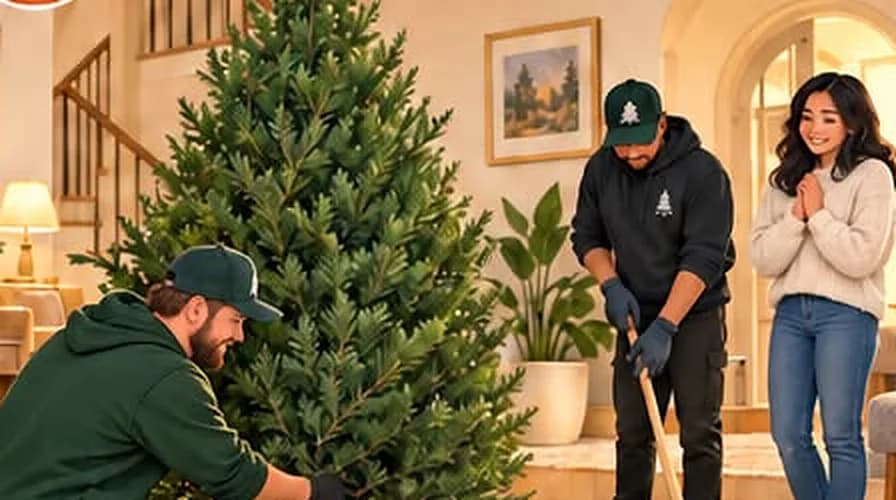
With setup, Hanniel carries the tree inside, protects the floor, puts it in the stand, gets it straight, adds water and sweeps up the needles. After that, the daily water is up to you. Still deciding how tall to go? Our Christmas tree size guide walks through ceilings, stands and floor space. When you're ready, start your order.